
How to spot it
The signals to look for in a problem statement, and the lookalikes that are not a match.
DSA LabAnimated algorithm lessons, free
Not a slideshow: a real algorithm running, one you can pause, scrub and feed your own input, with the code lit line by line beside it.
01The lessons
Once you have seen one halving, you recognise the next. Lessons sit in families, so a pattern you learn once carries to the problems that look different.
01 · 4 lessons
Binary search’s halving: the window shrinks by half every step, survivors respread.
02 · 2 lessons
Two ends walk toward each other, one retiring per check.
03 · 2 lessons
One guide sweeps forward, tracking a running best as it goes.
04 · 3 lessons
A write and a read pointer, bars trading slots instead of a second array.
05 · 1 lesson
Both ends only move forward — expand to grow, shrink while still valid.
02Inside a lesson
Every lesson follows one structure, so once you have done one you know how all of them work.
What the job is, the obvious way to do it, and what that costs. You see why a technique exists before it appears.
The algorithm animates on real values with the matching line of code lit, and the live variables beside it.
Drag the timeline to any moment and see a real in-between frame, not the next slide. Change the speed or step a beat at a time.
Edit the array or the target and the whole run is recomputed on your numbers.
03After the animation
A lesson does not stop when the animation does. It teaches you to find the pattern in a problem you have never seen.
The signals to look for in a problem statement, and the lookalikes that are not a match.
The cost of the technique set against the obvious way, in numbers you just watched.
The off-by-one and the edge cases that actually cost people time.
Six problems for the pattern. Tick them off or schedule them into your plan.
04Real numbers
The Algorithms topic backs its claims with counts from real runs. Here are two of them.
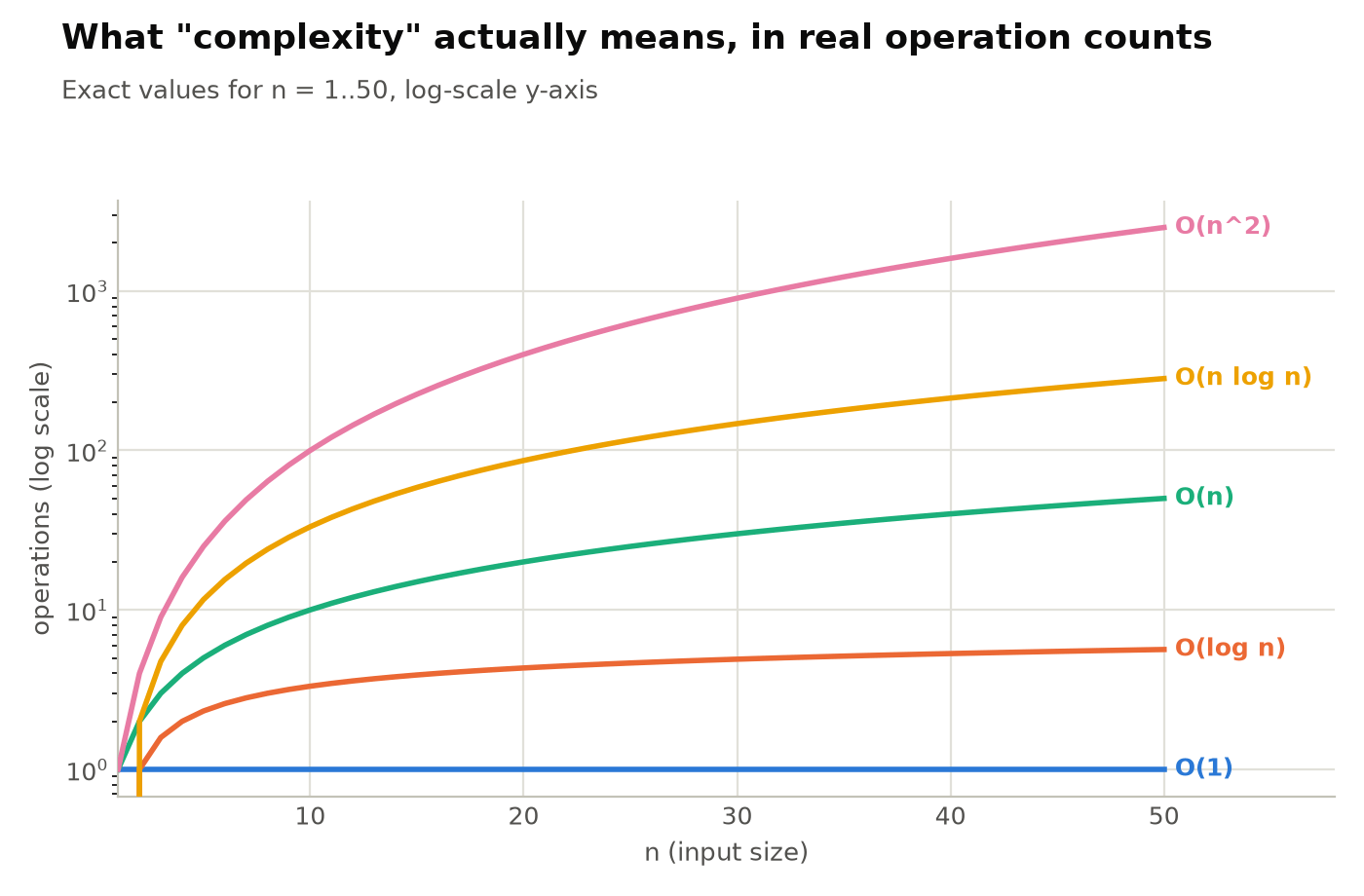
What “complexity” means in real operation counts, for n = 1 to 50 on a log scale.
Algorithms topic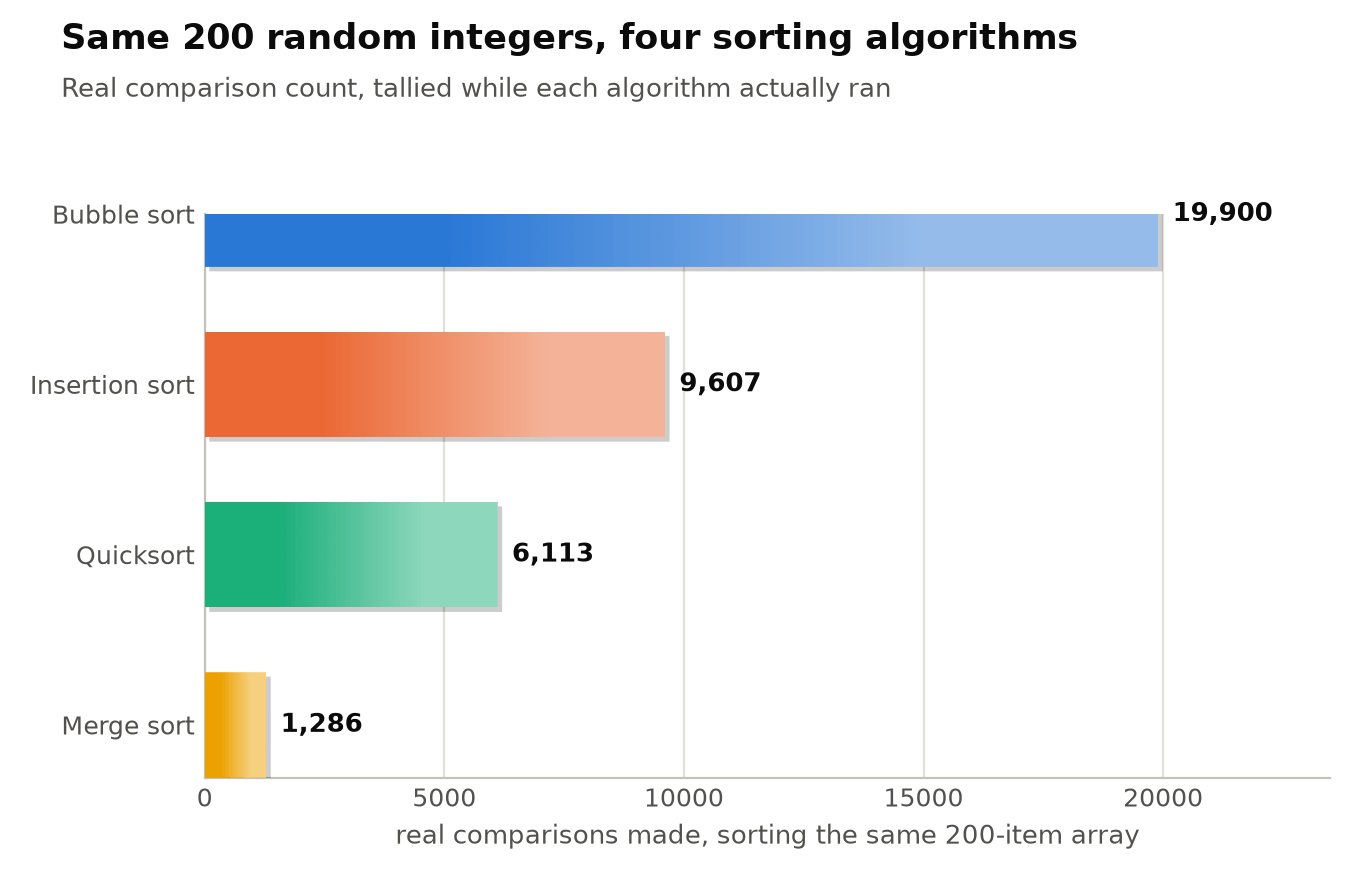
The same 200 integers through four sorts: 19,900 comparisons for bubble sort, 1,286 for merge sort.
Algorithms topic05With the assistant
Watching is free. When you sign in, the assistant is there while you work through a lesson.
 AI
The assistant sits at the edge of every page in the app. Ask why a pointer moved, or what a technique costs, without leaving the lesson.
Speak the question where the browser supports speech input.
Ask it to put a lesson’s practice problems on your study days. It shows the change first; nothing is applied until you confirm.
AI features need a free account. Public pages are read-only.
?Questions
12 lessons are open now, each one free to run on your own input.