Data collection, cleaning and quality checks
standardbeginnerBefore a model can learn anything, data has to be collected, often labeled by hand or by another process, cleaned of errors, normalized into a consistent format, and checked for duplicates — a model trained on dirty data learns the dirt along with the pattern.
Think of it as
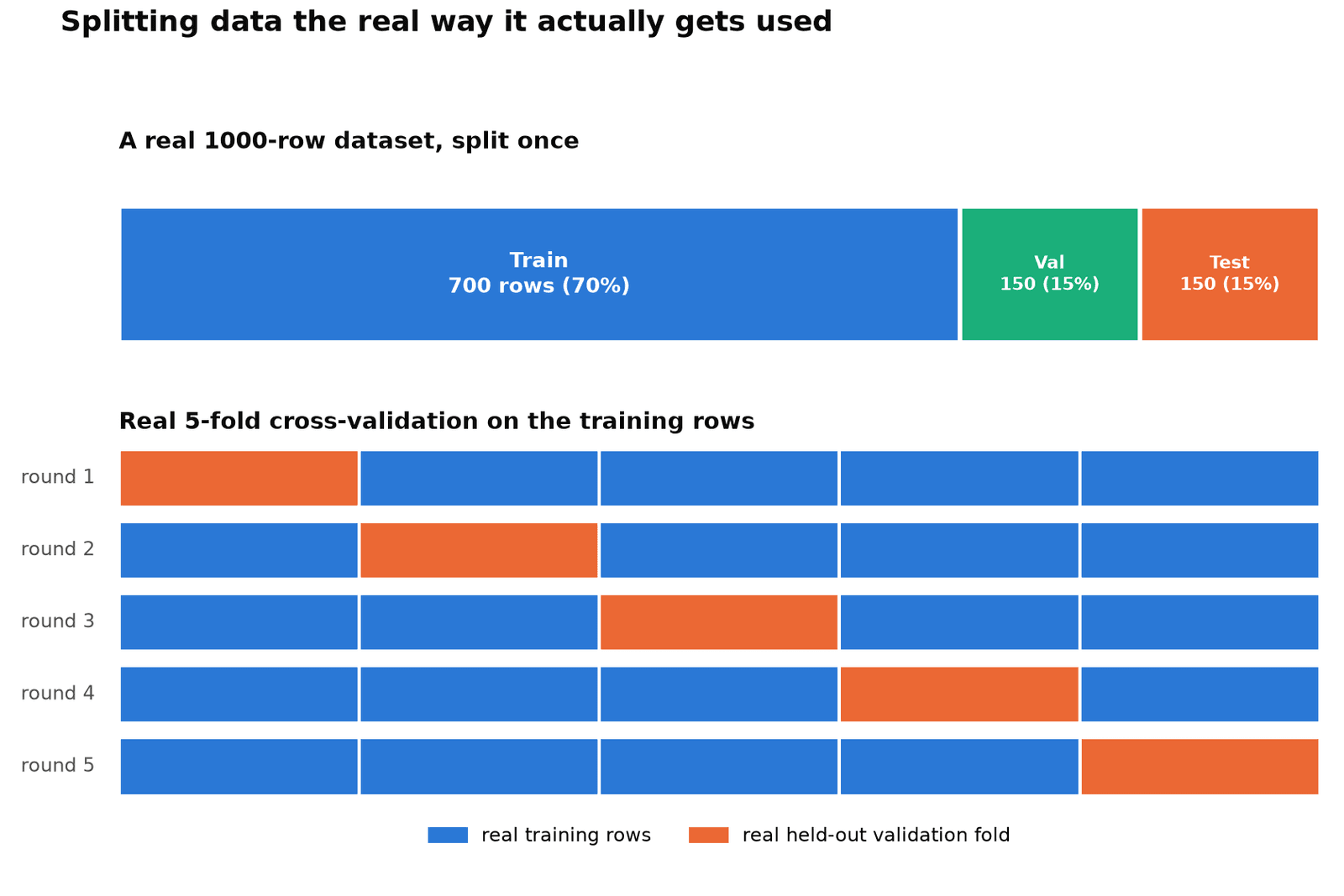
Every one of these steps exists to answer the same question: does this row actually represent what it claims to? Collection is where bias first enters a dataset — who or what generated the raw data determines what the model can ever learn. Labeling attaches the ground truth a supervised model needs, and label quality caps model quality: a model cannot be more accurate than its labels are correct. Cleaning fixes malformed values — a negative age, a price stored as text in one row and a number in the next. Normalization makes formats consistent (dates, units, casing) so the same real-world value is not treated as several different ones. Deduplication matters more than it looks: a duplicate row that ends up split across train and validation silently leaks train-set information into validation, inflating the reported score. Quality checks are the habit of verifying all of the above actually happened, rather than assuming it did.
Data quality checks worth automating
Remember: Collection sets what the model can learn; label quality caps model quality. Cleaning and normalization make values consistent; deduplication prevents silent leakage across splits; quality checks verify all of it actually happened.